

 enquête maintenant


The Quick Answer: What Is a Pressure Vessel?
A pressure vessel is a sealed container designed to hold gases or liquids at a pressure significantly different from the surrounding atmospheric pressure — often much higher, but sometimes much lower, as in vacuum vessels. The defining feature of a pressure vessel is not its shape or size, but the fact that the pressure difference between its inside and outside creates stress on its walls that the structure must be engineered to safely withstand. Common examples include air compressor tanks, propane cylinders, boilers, autoclaves, and the large spherical or cylindrical tanks seen at refineries and chemical plants.
Pressure vessels are everywhere in modern industry and even in everyday life. A household water heater is technically a small pressure vessel, as is a fire extinguisher, a scuba tank, or a soda keg. On a much larger scale, pressure vessels form the core of oil refineries, nuclear reactors, power plant boilers, and natural gas storage facilities. What unites all of these — from a 5-gallon propane tank to a 500,000-gallon spherical storage tank — is that they are designed, calculated, tested, and certified according to strict engineering codes because a failure under pressure can release stored energy violently and dangerously.
This guide breaks down how pressure vessels work, the main types you'll encounter by shape and by function, the key components that make up a typical vessel, the materials used to build them, where they're applied across industries, and the design codes and safety practices that govern their use.
It's also worth noting that the term "pressure vessel" is primarily a regulatory and engineering classification rather than a casual descriptive term. Two containers that look nearly identical from the outside — say, a propane tank and a similarly sized atmospheric tank for storing water — can fall into completely different regulatory categories depending on the pressure they're designed to hold. That distinction determines which design code applies, how the vessel must be fabricated and tested, who is qualified to inspect it, and how often it needs to be re-certified throughout its working life.
How Does a Pressure Vessel Work? The Basic Principles
At its core, a pressure vessel works by containing a fluid (liquid, gas, or vapor) at a pressure different from its surroundings, and the vessel's walls must resist the resulting stress without rupturing, deforming permanently, or leaking. The pressure inside pushes outward (or, in a vacuum vessel, the atmosphere pushes inward), and the shell of the vessel must be thick enough and made of a strong enough material to handle that force across its entire surface.
Why Shape Matters
Pressure vessels are almost always cylindrical or spherical, and this isn't an aesthetic choice — it's a direct result of physics. A sphere distributes stress evenly across its entire surface in every direction, which is why spherical tanks can hold the highest pressures relative to their wall thickness and material weight. Cylinders are slightly less efficient than spheres but are far easier and cheaper to manufacture, transport, and fit with nozzles and supports, which is why cylindrical vessels with rounded (dished) heads are by far the most common design in industry.
Stress, Thickness, and Pressure Rating
For a cylindrical vessel, the stress in the wall running around the circumference (called hoop stress) is typically twice the stress running along its length (longitudinal stress) for the same internal pressure. This is why cylindrical tanks, if they were to fail, tend to split along their length rather than across their width — engineers design around this by making sure the wall thickness and material strength account for the higher hoop stress. Every pressure vessel has a Maximum Allowable Working Pressure (MAWP), the highest pressure it is certified to operate at under normal conditions, and this number is stamped on the vessel's nameplate along with other key design data.
Temperature is the other major variable in vessel design, and it interacts with pressure in important ways. Most materials lose strength as temperature rises, which is why a vessel's allowable working pressure typically decreases at higher operating temperatures — a vessel rated for 300 psi at room temperature might only be rated for 200 psi at 500°F using the same wall thickness. At the other extreme, some materials become brittle at very low temperatures, which is why cryogenic vessels storing liquefied gases like nitrogen or LNG require special low-temperature steels or alloys that retain their toughness in the cold. Every pressure vessel nameplate therefore lists both a design pressure and a design temperature range, not just a single pressure figure.
Types of Pressure Vessels by Shape and Orientation
When people talk about "types" of pressure vessels, they're usually referring either to the vessel's geometry (its shape and orientation) or its function within a process (storage, reaction, separation, and so on). Both classifications matter, since shape affects pressure capacity and footprint, while function determines what internal features the vessel needs.
Common Shapes and Orientations
| Type | Description | Typical Use Case |
|---|---|---|
| Horizontal cylindrical | Cylinder lying on its side, supported on saddles | Storage tanks, knockout drums, surge vessels |
| Vertical cylindrical | Cylinder standing upright on a skirt or legs | Reactors, columns, towers, separators |
| Spherical | Ball-shaped, supported on multiple legs | High-pressure gas storage (LPG, ammonia) |
| Spheroid / bullet tank | Elongated cylinder with hemispherical or domed ends | Propane and butane storage at fuel depots |
| Rectangular / box-shaped | Flat-walled vessel, used only for low pressures | Low-pressure air receivers, some heat exchangers |
Horizontal vessels are generally favored when floor space is plentiful and the vessel needs to handle large volumes of liquid with relatively low liquid levels, such as separators that need a long, shallow liquid surface for gas to disengage. Vertical vessels are favored when floor space is limited, when gravity-driven processes like distillation require height, or when a tall column of catalyst, packing, or trays is needed. Spherical vessels become economically attractive mainly at higher pressures — typically above roughly 15–20 bar — where their superior stress distribution starts to outweigh their higher fabrication complexity compared to cylinders.
Spherical tanks are also distinctive because of how they're supported: rather than sitting on saddles or a skirt like a cylindrical vessel, a sphere typically rests on a ring of vertical legs (often called a "spider" support structure) evenly spaced around its circumference, each one transferring a portion of the vessel's weight to a separate foundation pad. This support arrangement, combined with the sphere's large diameter relative to its volume, is why spherical tanks are often the most visually recognizable structures at a tank farm — even though, volume for volume, they're usually used for smaller total inventories than the large horizontal or vertical cylindrical tanks nearby.
Types of Pressure Vessels by Function
Beyond shape, pressure vessels are often categorized by the role they play in an industrial process. While the underlying pressure-containment principles are the same, each functional type has internal features tailored to its job.
Storage Vessels
Storage vessels simply hold a fluid until it's needed, without any chemical reaction taking place inside. Examples include propane tanks, compressed air receivers, and ammonia storage spheres. These vessels are usually the simplest internally, often containing little more than inlet/outlet nozzles, a level gauge, and a pressure relief device.
Reactors
Reactor vessels are where a chemical or physical transformation happens under controlled pressure and temperature — for example, polymerization reactors in plastics manufacturing or hydrocracking reactors in oil refining. These often include agitators, internal coils or jackets for heating and cooling, and catalyst beds, all of which must be designed to withstand the same internal pressure as the shell.
Heat Exchangers
Shell-and-tube heat exchangers are technically pressure vessels on both the shell side and the tube side, since each side may operate at a different pressure and temperature, transferring heat between two fluids without mixing them. Because both sides are pressurized independently, these units require careful design at the tubesheet — the component separating the two fluid paths.
Separators and Columns
Separator vessels split a mixed stream into its component phases — for example, separating oil, water, and gas coming out of a wellhead. Distillation columns are a tall, specialized form of separator that use trays or packing to separate liquids by boiling point, all while containing the column's operating pressure along its full height.
Boilers and Steam Drums
Boilers generate steam by heating water under pressure, and the steam drum at the top of a boiler is a pressure vessel that separates steam from water and acts as a buffer for the steam supply to downstream equipment such as turbines.
Key Components of a Pressure Vessel
While pressure vessels vary widely in size and purpose, most share a common set of structural and functional components. Understanding these parts makes it much easier to read a vessel drawing, follow a maintenance procedure, or simply understand why a vessel is shaped the way it is.
Shell
The shell is the main cylindrical (or spherical) body of the vessel, formed from rolled and welded steel plates. Its thickness is calculated based on the design pressure, diameter, and material strength, and it's the component that carries the bulk of the pressure-induced stress.
Heads (End Caps)
Heads close off the ends of a cylindrical shell. They come in several standard shapes — hemispherical (a half-sphere, the strongest but most expensive), ellipsoidal (a 2:1 elliptical dome, the most common for moderate to high pressures), torispherical (a flatter dished head, common for lower pressures), and flat (used only for low-pressure or small-diameter vessels). The head shape directly affects how much pressure the vessel can handle for a given thickness, with hemispherical heads offering the best strength-to-weight ratio.
Nozzles
Nozzles are the openings welded into the shell or heads that allow piping connections for inlets, outlets, instrumentation, and manways (access openings for inspection and maintenance). Each nozzle is a potential weak point because cutting a hole in the shell removes material that was carrying load, so nozzles are typically reinforced with extra material around the opening, called a reinforcing pad or a thicker "nozzle neck." Larger vessels may have a dozen or more nozzles of different sizes, each sized and rated for a specific connection — from small instrument taps just a fraction of an inch in diameter to large manways over 20 inches across that allow a person to physically enter the vessel for inspection or maintenance.
Supports
Supports hold the vessel in place and transfer its weight (and the weight of its contents) to the foundation. Horizontal vessels typically sit on two saddle supports; vertical vessels may use a skirt (a cylindrical extension welded to the bottom head), support legs, or lugs bolted to a structure.
Pressure Relief Devices
Pressure relief valves or rupture discs are safety devices designed to open automatically and release fluid if the internal pressure exceeds a safe limit, preventing the vessel from being over-pressurized beyond its design limits. These devices are arguably the single most important safety component on any pressure vessel. A spring-loaded relief valve opens at a preset pressure and typically recloses once the pressure drops back to a safe level, allowing the vessel to return to normal operation without intervention. A rupture disc, by contrast, is a thin metal membrane that bursts open at a set pressure and does not reclose — once it activates, the vessel must be taken out of service and the disc replaced before it can be returned to operation. Some vessels use both in combination, with a rupture disc providing a backup in case the relief valve fails to open in time.
Internals
Depending on function, vessels may contain internal components such as baffles (to direct flow), demister pads (to remove liquid droplets from gas), trays or packing (for separation columns), agitators (for reactors), or coils and jackets (for heating or cooling).
Nameplate
Every code-certified pressure vessel carries a metal nameplate stamped with critical information: the manufacturer, manufacturing date, design pressure and temperature, MAWP, the code under which it was built (such as ASME), and a unique serial or registration number used to track the vessel throughout its service life.
Materials Used in Pressure Vessel Construction
Material selection for a pressure vessel depends on the pressure, temperature, and the chemical properties of the fluid being contained. The wrong material choice can lead to corrosion, embrittlement, or cracking — all of which can cause a vessel to fail well before its calculated pressure limit is reached.
Common Pressure Vessel Materials
| Material | Key Properties | Typical Applications |
|---|---|---|
| Carbon steel | Strong, low-cost, widely available | General storage tanks, air receivers, non-corrosive process vessels |
| Stainless steel | Corrosion-resistant, hygienic surface finish | Food/pharma processing, chemical reactors, sterile autoclaves |
| Low-alloy steel (chrome-moly) | High-temperature strength, hydrogen resistance | Refinery reactors, hydroprocessing units |
| Nickel alloys | Extreme corrosion and temperature resistance | Highly corrosive chemical processes, specialty reactors |
| Composite / fiberglass (FRP) | Lightweight, corrosion-resistant, lower pressure rating | Water treatment vessels, scuba tanks, some storage tanks |
Carbon steel remains the most widely used pressure vessel material because it offers a strong combination of cost, availability, and mechanical properties for a huge range of pressures and temperatures, as long as the contained fluid isn't highly corrosive. When corrosion resistance is required, designers either switch to stainless steel or a nickel alloy entirely, or add a corrosion-resistant lining (such as rubber, glass, or a stainless cladding) over a carbon steel shell to combine strength with chemical resistance at a lower cost than a solid alloy vessel.
Material selection also has to account for how the material behaves over the vessel's entire service life, not just at the moment of fabrication. Some corrosion mechanisms, such as hydrogen attack in refinery hydroprocessing units or stress corrosion cracking in certain caustic or chloride-containing services, only become apparent after years of operation and require specific alloy choices or protective linings identified well in advance at the design stage. This is one of the reasons why experienced process engineers and materials specialists are involved early in any new pressure vessel project, rather than treating material selection as a simple cost comparison between steel grades.
Common Applications of Pressure Vessels Across Industries
Pressure vessels appear in nearly every major industrial sector, and recognizing them in context helps illustrate just how broad the category really is.
Oil, Gas, and Petrochemical
Refineries and petrochemical plants are dense with pressure vessels: separators at wellheads, distillation columns that split crude oil into fuel fractions, reactors that convert heavy oils into lighter products, and spherical or bullet tanks that store LPG, propane, and butane under pressure.
Power Generation
Boilers in fossil-fuel and biomass power plants are large pressure vessels that convert water into high-pressure steam to drive turbines. Nuclear power plants rely on a reactor pressure vessel — one of the most heavily engineered pressure vessels in existence — to contain the nuclear fuel and primary coolant under extreme pressure and radiation conditions.
Chemical and Pharmaceutical Manufacturing
Reactor vessels carry out chemical synthesis under controlled pressure and temperature, while autoclaves — a type of pressure vessel — are used for sterilization, curing composite materials, and certain pharmaceutical production processes that require elevated pressure and heat.
Food and Beverage
Carbonation tanks, brewery fermenters operating under slight pressure, and retort sterilizers for canned food all qualify as pressure vessels, typically built from stainless steel for hygiene and corrosion resistance.
Everyday and Consumer Uses
- Air compressor tanks: Store compressed air for tools and equipment
- Propane and LPG cylinders: Store fuel for grills, heaters, and vehicles
- Fire extinguishers: Store pressurized extinguishing agent for rapid release
- Scuba and medical oxygen tanks: Store compressed gas for breathing applications
- Residential water heaters and expansion tanks: Hold heated water or buffer pressure in plumbing systems
How Pressure Vessels Are Manufactured
Understanding the basic fabrication process helps explain why pressure vessel components look the way they do, and why quality control is so heavily emphasized throughout construction.
Rolling and Forming
The shell of a cylindrical vessel typically starts as flat steel plate, which is rolled into a cylindrical shape using large plate-rolling machines. Heads are formed separately, often by hot or cold pressing a flat circular plate into the desired dished or hemispherical shape using a die. For very large vessels, the shell may be made from several rolled sections, called courses, welded together end to end.
Welding
Welding is the most critical step in vessel fabrication, since the welded seams — particularly the longitudinal seam running along the shell and the circumferential seams joining the heads to the shell — are the joints most likely to contain defects if not done correctly. Welders and welding procedures must be formally qualified according to the governing code before they're permitted to work on pressure vessel components, and many seams undergo radiographic or ultrasonic examination afterward to check for internal flaws like porosity, lack of fusion, or cracking that aren't visible from the surface.
Heat Treatment
After welding, many vessels — especially those made from thicker plate or certain alloy steels — undergo post-weld heat treatment (PWHT), where the entire vessel is heated to a specific temperature and held for a set time before slowly cooling. This process relieves residual stresses left behind by welding and improves the toughness of the weld and surrounding material, reducing the risk of cracking in service.
Hydrostatic Testing
Once fabrication is complete, the finished vessel is filled with water and pressurized to a level above its design pressure — commonly 1.3 to 1.5 times the MAWP — and held for a specified time while inspectors check for leaks or visible deformation. Water is used instead of air or gas because it's essentially incompressible, so if a failure were to occur during the test, the energy released would be far smaller than it would be with a compressible gas at the same pressure, making the test itself much safer to perform.
Pressure Vessel Design Codes and Standards
Because a pressure vessel failure can release stored energy with explosive force, pressure vessels are among the most heavily regulated pieces of industrial equipment in the world. Design, fabrication, inspection, and testing are governed by formal codes that specify everything from minimum wall thickness calculations to welding procedures and testing methods.
ASME Boiler and Pressure Vessel Code (BPVC)
In the United States and many other countries, the ASME Boiler and Pressure Vessel Code is the most widely referenced standard. Section VIII of the ASME BPVC specifically covers the design, fabrication, and inspection of pressure vessels, and is divided into Divisions 1, 2, and 3 based on pressure range and design approach — Division 1 uses simpler design-by-rule formulas suitable for the vast majority of vessels, while Divisions 2 and 3 allow for higher pressures using more rigorous design-by-analysis methods.
Other Major Standards
- PED (Pressure Equipment Directive): The European Union's regulatory framework for pressure equipment, often paired with the EN 13445 design standard
- PD 5500: A British standard for unfired fusion-welded pressure vessels, commonly used as an alternative to ASME in the UK
- CSA B51: The Canadian standard governing boiler, pressure vessel, and pressure piping codes
- API standards: The American Petroleum Institute publishes inspection and maintenance standards (such as API 510) specifically for in-service pressure vessels in the oil and gas industry
Regardless of which code applies, the general process is similar: an engineer calculates the required wall thickness based on design pressure, temperature, material properties, and a safety margin; a certified fabricator builds the vessel using qualified welding procedures; and an authorized inspector verifies the construction, often witnessing a hydrostatic test where the vessel is filled with water and pressurized well above its design pressure (commonly 1.3 to 1.5 times MAWP) to confirm it can safely handle its rated operating conditions.
Pressure Vessel Safety and Inspection
Designing and building a pressure vessel correctly is only half the story — ongoing inspection and maintenance are what keep it safe over decades of service, since materials can degrade in ways that aren't visible from the outside.
Common Failure Mechanisms
- Corrosion: Gradual thinning of the shell or internal components due to chemical attack, the most common cause of long-term vessel degradation
- Fatigue cracking: Small cracks that grow over time due to repeated pressure or temperature cycling, often starting at welds or nozzle junctions
- Overpressure: Operating beyond the design pressure, usually prevented by properly sized and maintained relief devices
- Brittle fracture: Sudden cracking at low temperatures in materials that lose ductility in the cold, which is why design temperature ranges include a minimum as well as a maximum
Inspection Methods
In-service pressure vessels are typically inspected on a scheduled basis using non-destructive testing (NDT) methods that don't damage the vessel. Ultrasonic thickness testing measures how much material remains after years of corrosion. Visual inspection, both external and internal (often through a manway), checks for cracks, bulges, or coating breakdown. Radiographic and magnetic particle testing can detect subsurface flaws in welds. Based on these inspections, an engineer can calculate the vessel's remaining safe operating life and recommend repairs, re-rating to a lower pressure, or retirement from service.
The Role of Pressure Relief Devices
Pressure relief valves are tested and recalibrated on a regular schedule, since a relief valve that fails to open at its set pressure removes the vessel's last line of defense against overpressure. Most jurisdictions legally require periodic relief valve testing and vessel inspection for vessels above a certain size or pressure, with inspection intervals often ranging from one to ten years depending on the vessel's service history and risk classification.
Pressure Vessel vs. Storage Tank: What's the Difference?
A question that comes up often is how a pressure vessel differs from an ordinary storage tank, since both can look similar from the outside — large metal cylinders or spheres holding liquids or gases.
| Aspect | Pressure Vessel | Atmospheric Storage Tank |
|---|---|---|
| Operating pressure | Significantly above (or below) atmospheric pressure | At or very near atmospheric pressure |
| Shape | Cylindrical with dished heads, or spherical | Often flat-bottomed with a flat or cone roof |
| Governing code | ASME Section VIII (or equivalent) | API 650 / API 620 (for low-pressure tanks) |
| Wall thickness driver | Internal pressure load | Liquid weight (hydrostatic head) |
In short, the line between a "tank" and a "pressure vessel" is drawn by the operating pressure, not the size or general appearance. A large flat-bottomed tank holding crude oil at essentially atmospheric pressure is a storage tank governed by tank-design codes like API 650, while a much smaller cylindrical vessel holding propane at 100+ psi is a pressure vessel governed by ASME Section VIII — even though the propane tank might be far smaller than the oil tank.
Frequently Asked Questions About Pressure Vessels
Here are direct answers to some of the most common questions people have when first learning about pressure vessels.
What is the difference between design pressure and operating pressure?
Operating pressure is the pressure the vessel runs at during normal use, while design pressure is a higher value used for engineering calculations that includes a margin above the operating pressure to account for normal fluctuations, control system response time, and unexpected upsets. A typical design margin might be 10% above the maximum expected operating pressure, ensuring the vessel has headroom before it ever approaches its actual structural limits.
Can a pressure vessel be dangerous if it operates at low pressure?
Yes. Vacuum vessels, which operate below atmospheric pressure, can be just as hazardous as high-pressure vessels because the atmosphere outside is constantly trying to crush the vessel inward — a failure mode called buckling or implosion. Vacuum vessels require their own specific design calculations that are different from, and sometimes more complex than, those for internal pressure.
Why are pressure vessel heads rounded instead of flat?
Flat heads concentrate stress at their edges and center, requiring very thick material to handle even moderate pressures. Rounded heads — hemispherical, ellipsoidal, or torispherical — distribute stress much more evenly across a curved surface, similar to how an arch distributes load, allowing the same pressure to be contained with significantly less material. This is why flat heads are generally limited to small-diameter or low-pressure vessels.
How long do pressure vessels typically last?
With proper maintenance, many pressure vessels remain in service for 20 to 40 years or more, and some well-maintained vessels in non-corrosive services have operated for over 50 years. The actual lifespan depends heavily on the corrosiveness of the contained fluid, the operating temperature, how often the vessel is cycled in pressure or temperature, and how diligently inspections and repairs are carried out over time.
Do small consumer items like propane tanks really count as pressure vessels?
Yes — size has nothing to do with the classification. A small propane cylinder for a backyard grill is a pressure vessel in exactly the same engineering sense as a massive spherical LPG storage tank at an industrial terminal; both are designed, tested, and stamped according to applicable pressure vessel codes, and both must be periodically inspected or requalified (for example, propane cylinders typically need to be re-certified every 10–12 years) to remain in legal service.
What happens if a pressure vessel fails?
A pressure vessel failure releases the energy stored in its compressed contents very quickly, and the consequences depend on what's inside. A vessel holding compressed air or an inert gas may simply vent loudly and propel fragments outward — still dangerous, but without a fire risk. A vessel holding a flammable or toxic substance adds the risk of fire, explosion, or a toxic release on top of the mechanical energy released. This is why pressure vessels handling hazardous materials are typically located with safety distances from occupied buildings, equipped with multiple layers of protection (relief devices, shutdown systems, fire protection), and subject to more frequent inspection than vessels in benign services.
Can a pressure vessel be repaired, or does it need to be replaced once damaged?
Many forms of damage can be repaired while keeping the vessel in service, depending on the severity and location of the defect. Minor corrosion that hasn't reduced the wall thickness below the calculated minimum may simply be monitored. More significant thinning can sometimes be addressed by welding on a reinforcing patch or sleeve, following the same code-qualified procedures used in original construction, after which the repair is documented and the vessel's allowable pressure may be re-evaluated. If damage is too extensive, located in a critical area like a nozzle-to-shell weld, or the vessel has reached the end of its calculated remaining life, replacement is generally the safer and more economical option.
Are pressure vessels regulated differently in different countries?
Yes, although the underlying engineering principles are universal, the specific codes and legal requirements vary by region. The ASME Boiler and Pressure Vessel Code dominates in North America and is widely accepted internationally, the EU relies on the Pressure Equipment Directive together with standards like EN 13445, and countries such as the UK, Canada, Japan, and China each maintain their own national standards or adaptations. A vessel built for one market often needs to be re-certified or supplied with additional documentation to be legally installed and operated in another, even if its physical design would otherwise be acceptable.
Summary: Key Takeaways About Pressure Vessels
Pressure vessels are sealed containers engineered to safely hold fluids at pressures different from the surrounding atmosphere, ranging from small propane cylinders to massive refinery reactors. Here's a quick recap of the essentials:
- A pressure vessel is defined by the pressure difference it must contain, not by its size, shape, or specific use
- Cylindrical and spherical shapes dominate vessel design because they distribute pressure-induced stress most efficiently
- Common functional types include storage vessels, reactors, heat exchangers, separators/columns, and boilers/steam drums
- Key components include the shell, heads, nozzles, supports, pressure relief devices, internals, and a code-stamped nameplate
- Material choice — typically carbon steel, stainless steel, or specialty alloys — depends on the pressure, temperature, and corrosiveness of the contained fluid
- Codes such as ASME Section VIII govern design, fabrication, and testing to ensure vessels can safely handle their rated pressures
- Ongoing inspection for corrosion, cracking, and proper relief valve function is essential to keeping a vessel safe over its service life
Whether you're encountering the term in an engineering course, a job description, or simply looking at the equipment around a chemical plant or your own backyard grill, recognizing what makes something a pressure vessel — and why its design and maintenance matter so much — gives you a solid foundation for understanding a huge range of industrial and everyday equipment.
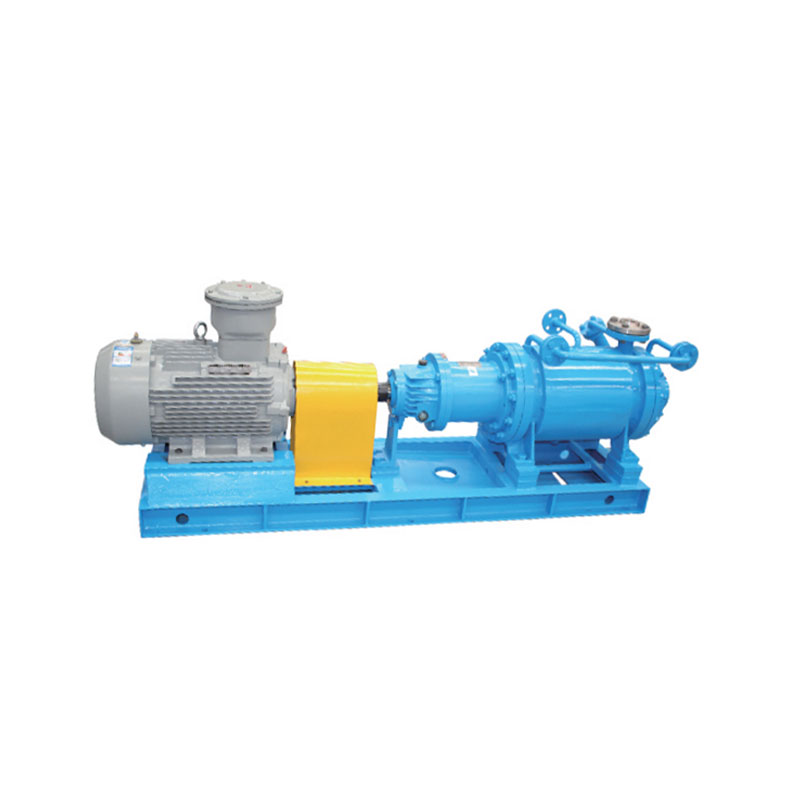
.jpg "Pompe multicellulaire horizontale à division axiale")



 TOP
TOP